
This classic white sauce, also known as béchamel, is a versatile base for many dishes. It's creamy, smooth, and can be customized with various seasonings to suit your taste. Perfect for pasta, casseroles, and more, this sauce is a staple in any kitchen.
Most of the ingredients for this white sauce are common pantry staples. However, if you don't usually keep nutmeg on hand, you might need to pick some up at the supermarket. Nutmeg adds a subtle, warm flavor that enhances the sauce, but it's optional if you prefer to skip it.
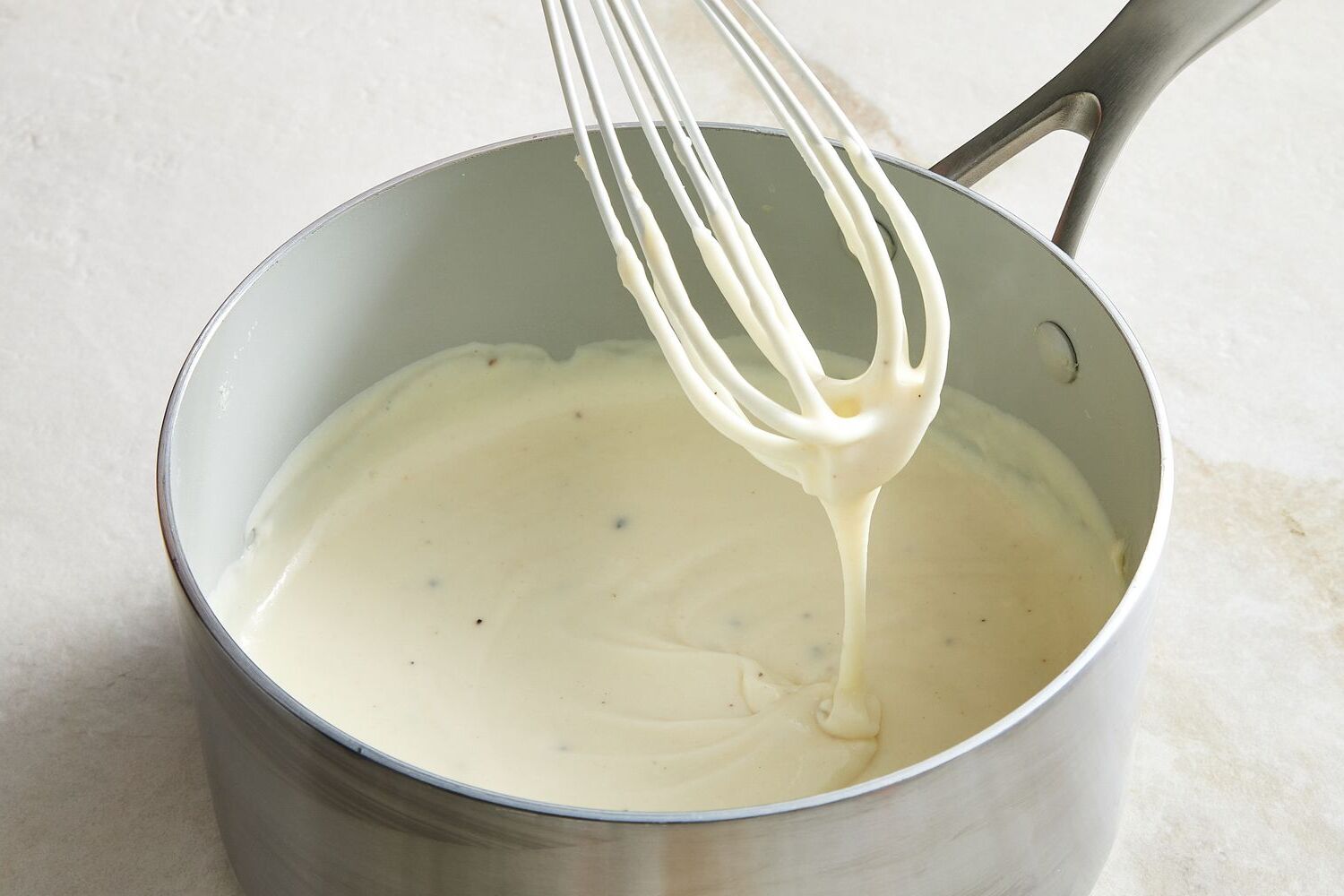
Ingredients for White Sauce Recipe
Butter: Adds richness and helps create the base of the sauce.
All-purpose flour: Thickens the sauce to the desired consistency.
Milk: Provides the creamy texture and body of the sauce.
Salt: Enhances the overall flavor of the sauce.
Black pepper: Adds a touch of heat and depth to the flavor.
Nutmeg: Optional, but adds a warm, subtle flavor that complements the sauce.
Technique Tip for This Recipe
When making a white sauce, it's crucial to whisk the flour and butter mixture continuously to avoid any lumps. This process, known as making a roux, ensures a smooth and creamy texture. Gradually adding the milk while whisking helps to incorporate it evenly, preventing any clumping. For an extra layer of flavor, consider adding a pinch of nutmeg; it complements the sauce beautifully.
Suggested Side Dishes
Alternative Ingredients
butter - Substitute with margarine: Margarine can be used as a direct substitute for butter in most recipes, providing a similar texture and flavor.
butter - Substitute with olive oil: Olive oil is a healthier alternative to butter and can be used to create a lighter sauce.
all-purpose flour - Substitute with cornstarch: Cornstarch can thicken sauces similarly to flour, but you may need to use half the amount.
all-purpose flour - Substitute with gluten-free flour: For those with gluten sensitivities, gluten-free flour can be used to achieve a similar consistency.
milk - Substitute with almond milk: Almond milk is a dairy-free alternative that works well in white sauces, though it may slightly alter the flavor.
milk - Substitute with coconut milk: Coconut milk provides a creamy texture and a subtle coconut flavor, making it a good dairy-free option.
salt - Substitute with soy sauce: Soy sauce can add a salty flavor along with a bit of umami, but use sparingly to avoid overpowering the dish.
salt - Substitute with sea salt: Sea salt can be used in place of regular table salt for a slightly different flavor profile.
black pepper - Substitute with white pepper: White pepper provides a similar heat and flavor but is less visible in white sauces.
black pepper - Substitute with cayenne pepper: Cayenne pepper adds a bit of heat and a different flavor profile, so use it sparingly.
nutmeg - Substitute with cinnamon: Cinnamon can provide a warm, sweet flavor similar to nutmeg, though it will slightly alter the taste.
nutmeg - Substitute with allspice: Allspice offers a similar warm, spicy flavor and can be used as a direct substitute for nutmeg.
Other Alternative Recipes Similar to This
How to Store or Freeze This Recipe
- Allow the white sauce to cool completely at room temperature before storing. This helps prevent condensation, which can make the sauce watery.
- Transfer the cooled sauce into an airtight container or a resealable plastic bag. If using a bag, lay it flat to save space and ensure even freezing.
- Label the container or bag with the date and contents. This will help you keep track of how long the sauce has been stored.
- Store the sauce in the refrigerator if you plan to use it within 3-5 days. For longer storage, place it in the freezer where it can last up to 3 months.
- When ready to use, thaw the frozen white sauce in the refrigerator overnight. Avoid thawing at room temperature to prevent bacterial growth.
- Reheat the sauce gently in a saucepan over low heat, stirring frequently to maintain a smooth consistency. If the sauce appears too thick, add a splash of milk or cream to reach the desired texture.
- For added flavor, consider incorporating fresh herbs, grated cheese, or a splash of white wine during reheating.
How to Reheat Leftovers
stovetop method: place the leftover white sauce in a saucepan over low heat. Stir continuously to prevent it from sticking or forming lumps. If the sauce is too thick, add a splash of milk or cream to reach the desired consistency. Heat until warmed through, about 5-7 minutes.
microwave method: transfer the white sauce to a microwave-safe bowl. Cover with a microwave-safe lid or plastic wrap with a small vent. Heat on medium power in 30-second intervals, stirring after each interval, until the sauce is heated evenly. If needed, add a bit of milk to adjust the consistency.
double boiler method: fill the bottom pot of a double boiler with water and bring it to a simmer. Place the leftover white sauce in the top pot and stir occasionally. This gentle heating method helps prevent the sauce from curdling or separating. Heat until the sauce is warm and smooth.
oven method: preheat your oven to 300°F (150°C). Pour the white sauce into an oven-safe dish and cover with aluminum foil. Heat for about 15-20 minutes, stirring halfway through, until the sauce is warmed through. If the sauce thickens too much, stir in a little milk or cream to reach the desired consistency.
Best Tools for This Recipe
Saucepan: Use this to melt the butter and cook the sauce. A medium-sized one works best.
Whisk: Essential for mixing the flour into the butter and for gradually incorporating the milk to avoid lumps.
Measuring spoons: These will help you measure out the butter and flour accurately.
Measuring cup: Use this to measure the milk precisely.
Stove: Needed to provide the heat for cooking the sauce.
Spatula: Useful for scraping down the sides of the saucepan to ensure all ingredients are well incorporated.
Nutmeg grater: If you're using nutmeg, this will help you grate it finely into the sauce.
Salt shaker: For adding salt to taste.
Pepper grinder: For adding freshly ground black pepper to taste.
How to Save Time on Making This Recipe
Pre-measure ingredients: Measure and set out all ingredients before you start cooking to streamline the process.
Use warm milk: Warm the milk slightly before adding it to the roux to speed up the thickening process.
Whisk continuously: Whisking constantly prevents lumps and ensures a smooth sauce.
Season at the end: Add salt, pepper, and nutmeg at the end to save time adjusting flavors.
White Sauce Recipe
Ingredients
Main Ingredients
- 2 tablespoons Butter
- 2 tablespoons All-purpose flour
- 1 cup Milk
- to taste Salt
- to taste Black pepper
- optional Nutmeg
Instructions
- 1. Melt the butter in a saucepan over medium heat.
- 2. Add the flour and whisk continuously for about 2 minutes.
- 3. Gradually add the milk, whisking constantly to avoid lumps.
- 4. Bring to a simmer and cook until thickened, about 5-7 minutes.
- 5. Season with salt, pepper, and nutmeg if using.
Nutritional Value
Keywords
More Amazing Recipes to Try 🙂
- Greekhouse Dressing Recipe10 Minutes
- Spicy Indian Chicken and Mango Curry Recipe1 Hours
- Indian Gobi 65 Recipe35 Minutes
- Indian Chilli Gobi Recipe40 Minutes
- Indian Coconut Chickpea Curry Recipe45 Minutes
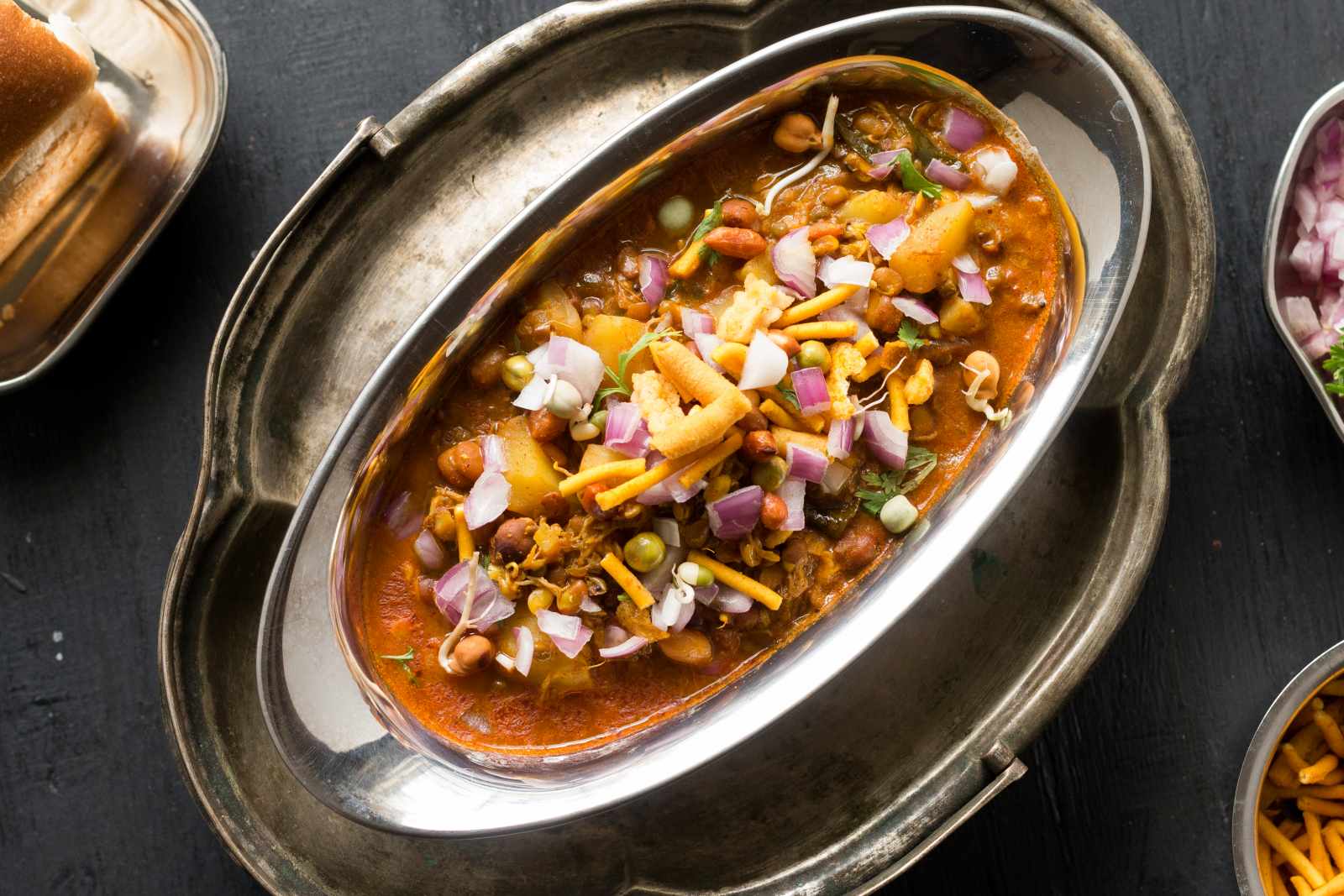
- Indian Misal Pav Recipe1 Hours
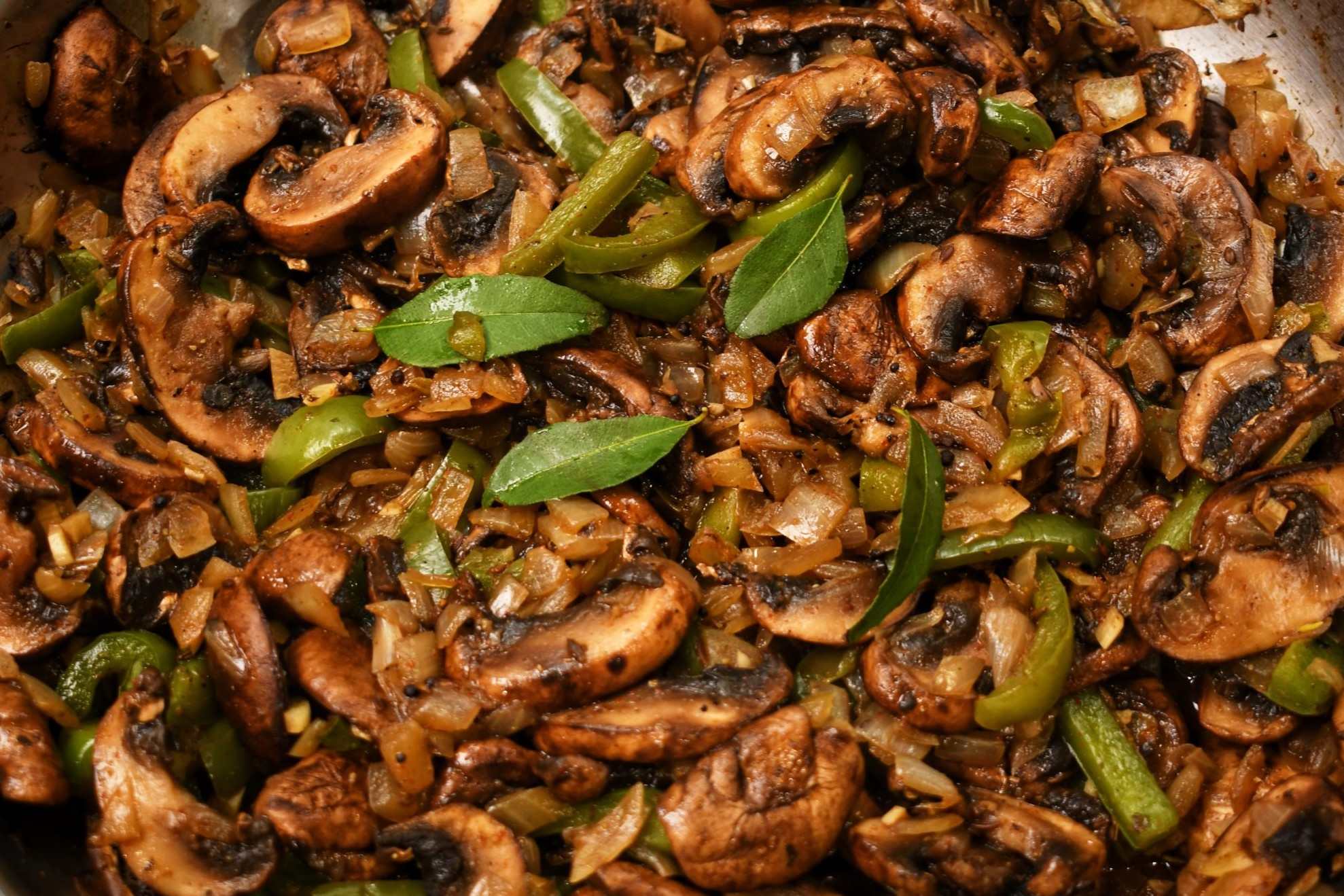
- Indian Mushroom Pepper Fry Recipe25 Minutes
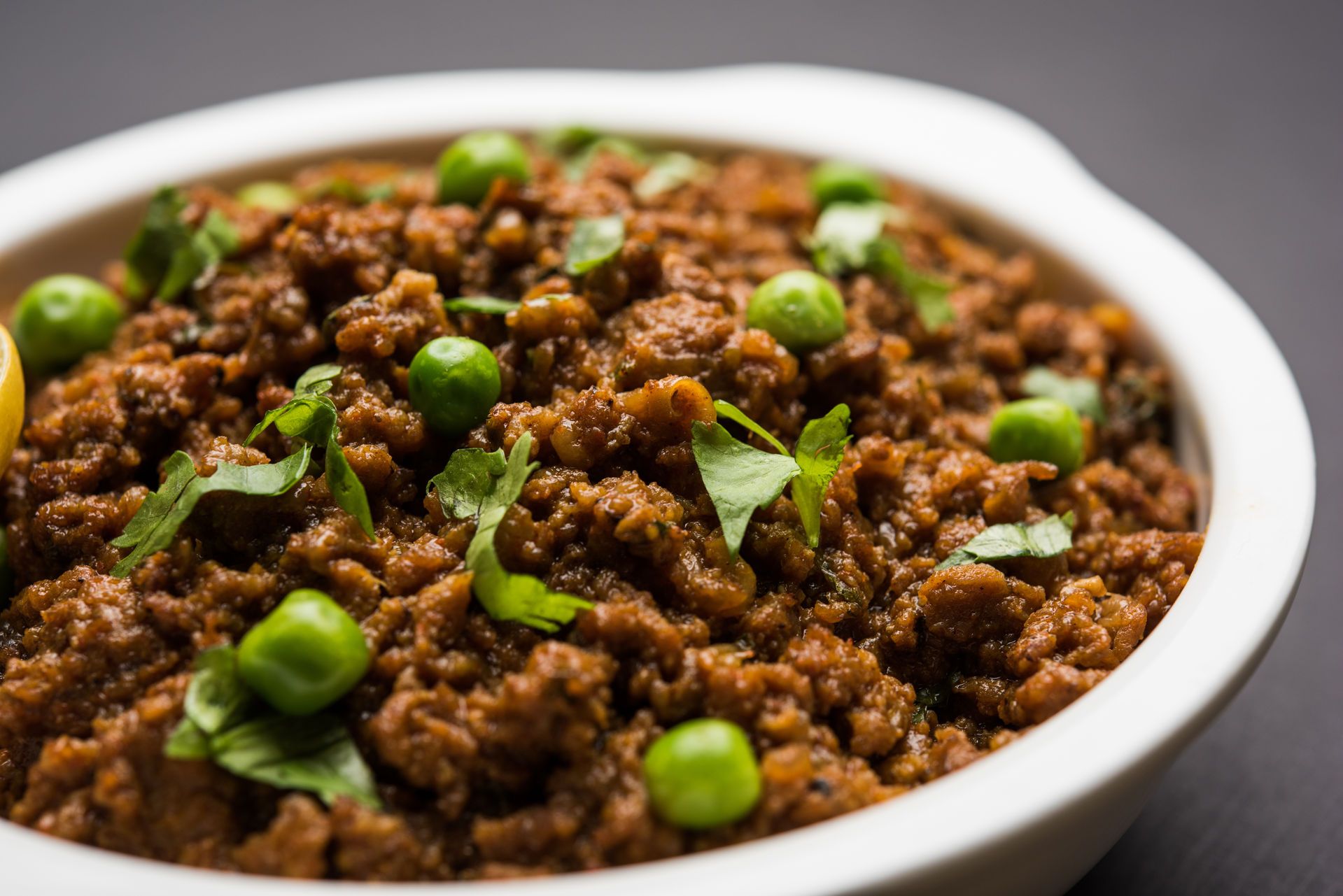
- Indian Soya Keema Recipe45 Minutes






Leave a Reply